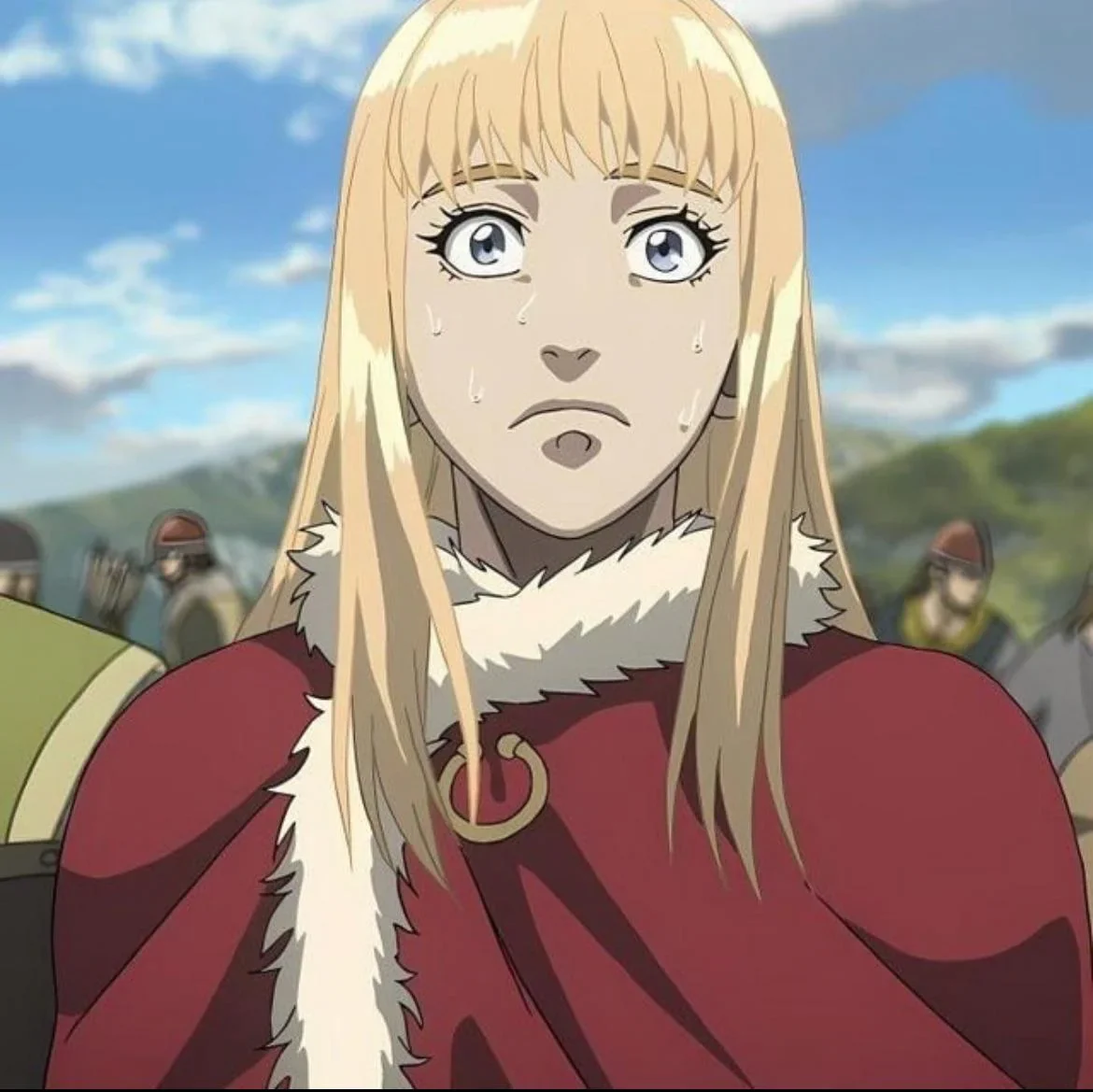
During the brutal English winter at the midpoint of Vinland Saga's prologue, the Christian priest Willibald articulates one of the most provocative, daring, and intellectually rigorous theological meditations in contemporary sequential art. While Askeladd's Norse mercenaries pillage defenseless villages and offer praise to Odin in celebration of brute strength, this ragged, drunken, tormented monk challenges the foundational assumptions of human morality by declaring that the everyday affection people call "love" is actually the root of all discrimination and slaughter.
The Sermon in the Snow: Deconstructing Earthly Affection
Willibald's existential crisis erupts as he observes Ragnar's fierce devotion to Prince Canute. The mercenaries watch the protector shield the young heir and casually remark: "Look at Ragnar, how much love he holds for the boy." Willibald's reply strikes the gathered soldiers like an icy wind:
"That is not love; it is discrimination. To love your prince while caring nothing for the English commoners... that is merely favoring your own blood at the expense of others. Whoever discriminates in this manner is incapable of knowing the true love of God."
This theological critique dismantles one of the sacred pillars of human society: tribal and familial loyalty (the Greek storge). For Willibald, selective love that prioritizes one's own kin over strangers is the engine driving every war in human history. When a father kills to feed his children, his domestic affection spawns tragedy for the family of his victim. By restricting empathy to the boundary of the clan, mankind divides the earth into allies to protect and enemies to despoil.
The Corpse as the Model of Pure Love: Agape Without Ego
To demonstrate the nature of authentic, selfless divine love (agape), Willibald presents a chilling parable: the dead body lying in the snow. A lifeless human corpse harbors neither hatred nor pride; if winter snow blankets it, it receives the cold in silence; if the wild beasts come to feed upon its flesh, it yields entirely to sustain the life of the forest.
The corpse does not discriminate: it does not prefer royal caresses over being consumed by carrion birds; it neither flees adversaries nor rewards friends. It has attained the supreme perfection of non-resistance because it has been stripped of ego, fear, and possessiveness. Living mortals, conversely, remain shackled to the selfish instinct of self-preservation, which inevitably compels us to sin and harm our fellow man to survive.
Parallels with Saint Augustine and Søren Kierkegaard
Willibald's philosophy reflects deep engagement with core currents in Western theological and existential thought:
- Saint Augustine's City of God: Augustine argued that human love within the fallen world (the civitas terrena) is corrupted by selfish pride, creating societies governed by domination and strife. Only divine grace can transcend this limitation, yet fallen mankind remains spiritually blind.
- Søren Kierkegaard's Works of Love: The Danish philosopher drew a sharp distinction between preferential love (erotic romance and friendship, which seek reciprocal emotional reward) and Christian neighbor-love, which demands extending compassion unconditionally to the enemy, the outcast, and the stranger without expecting return.
The Impact on Canute: The Birth of Imperial Messianism
Willibald's sermon serves as the direct intellectual catalyst for Canute's transformation following Ragnar's murder. Looking upon his guardian's slain corpse and absorbing the priest's words, the prince realizes that waiting for fallen humanity to spontaneously attain universal love is a hopeless illusion: mankind cannot transcend its fractured nature on its own.
In that moment of epiphany, Canute resolves that if God will not descend to heal human suffering, he will take up the crown as an earthly Messiah. He will enforce peace through imperial law, standing armies, and sovereign authority, bearing the weight of sin so his subjects can live in civil harmony. Willibald's radical theology, conceived for mystical contemplation, becomes the philosophical fuel of an imperial revolution.
Agape Versus Preference: The Theological Fracture that Forged an Emperor
The dialogue beneath the English blizzard between the alcoholic monk Willibald and Prince Canute following Ragnar's death (Manga Chapters 37–38) stands among the boldest philosophical exchanges in contemporary Japanese fiction. Here Makoto Yukimura introduces the classic theological distinction—systematized in the twentieth century by the Swedish Lutheran philosopher Anders Nygren in Agape and Eros—between possessive, preferential human affection and the unconditional, non-discriminating love of nature (Agape). When Ragnar prays with his dying breath exclusively for Canute's safety while ignoring the slaughter of sixty innocent villagers in Mercia, Willibald pronounces that such paternal devotion is not divine love at all, but 'discrimination': an expanded tribal egoism willing to sacrifice the rest of humanity for its favored child.
Willibald's radical provocation pushes this logic to its most unsettling conclusion: the only entity in the visible universe that practices pure love without preference or self-interest is a corpse. A dead body no longer hates, fears, hoards wealth, or defends borders; it surrenders its flesh freely to wolves, ravens, and the frozen earth to nourish the cycle of creation. If living men are biologically and psychologically incapable of loving without discriminating, then divine creation harbors a tragic original flaw: God commands mortals to uphold universal charity while binding them to an instinct of self-preservation that makes such charity impossible.
Confronted with this abyssal paradox, Canute chooses neither mystical resignation nor pious martyrdom, but what Albert Camus termed in The Rebel 'metaphysical rebellion.' If the Heavenly Father has cast humanity out of Eden and remains silent before the suffering of the innocent, then the earthly monarch must challenge God Himself and construct a political paradise on Earth by force.
Thus Canute's theological epiphany bifurcates sharply from Thorfinn's future path: whereas Thorfinn will strive to embody peace from below by renouncing violence in Vinland, King Canute embraces the sin of tyranny to pacify the northern empire through blood and iron.
Key Philosophical & Ethical Takeaways
- Critique of Tribal Affection: Loving only one's own family or clan at the expense of slaughtering strangers is the psychological engine of warfare.
- The Paradox of Death: In a world governed by biological predation, only inert matter fulfills nature's impartial giving.
- Birth of Utopian Absolutism: Canute transforms his grief for Ragnar into an imperial project aimed at correcting creation's imperfection by royal decree.
Conclusion: The Challenge of Transcendent Love
Willibald's discourse on love as discrimination remains one of the most haunting ethical inquiries in Vinland Saga. It challenges us to examine the purity of our own attachments and exposes the moral boundaries of tribal empathy. It teaches that authentic brotherhood consists not in loving those who mirror us, but in daring to disarm our hearts before the stranger and recognizing the inviolable dignity of all creation without exclusion.